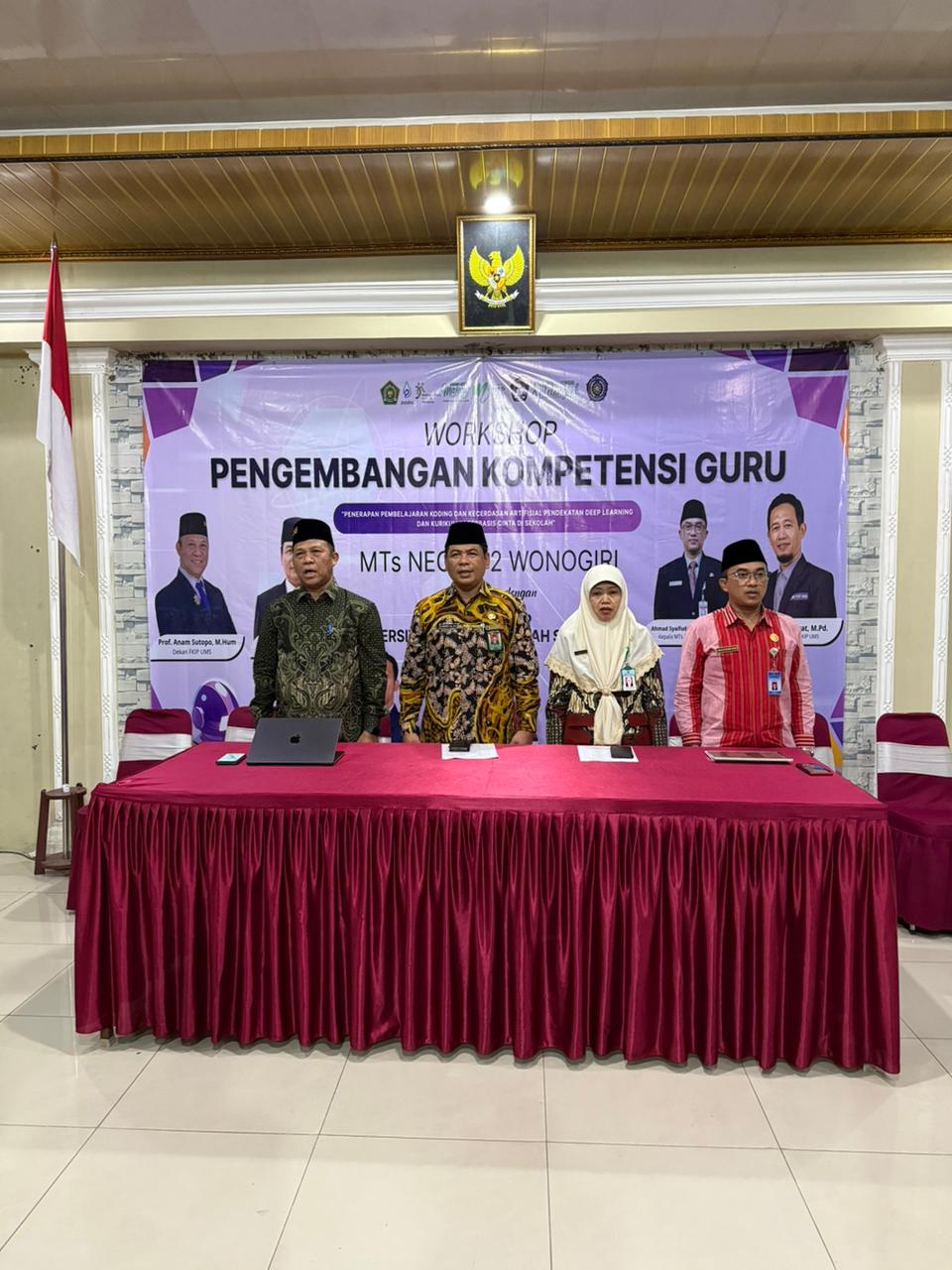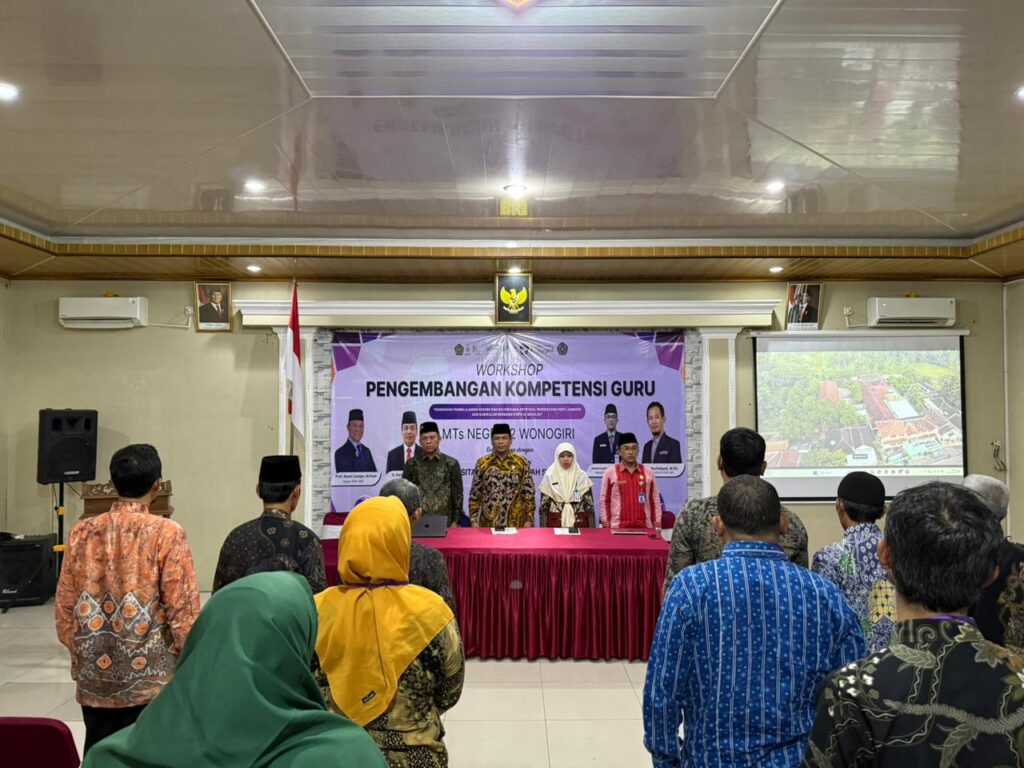
Wonogiri, 2025 — The Faculty of Teacher Training and Education, Universitas Muhammadiyah Surakarta (FKIP UMS) in collaboration with the Ministry of Religious Affairs (Kemenag) of Wonogiri Regency held a Teacher Competency Development Program for MTs Teachers with the theme “Implementation of Coding and Artificial Intelligence Learning through a Deep Learning and Creation-Based Curriculum Approach in Schools.”
This activity is part of the partnership program between the Teacher and Educational Personnel Development Center (BPGTK) FKIP UMS and the Wonogiri Ministry of Religious Affairs Office, aimed at strengthening the capacity of madrasah teachers in facing the challenges of 21st-century learning.
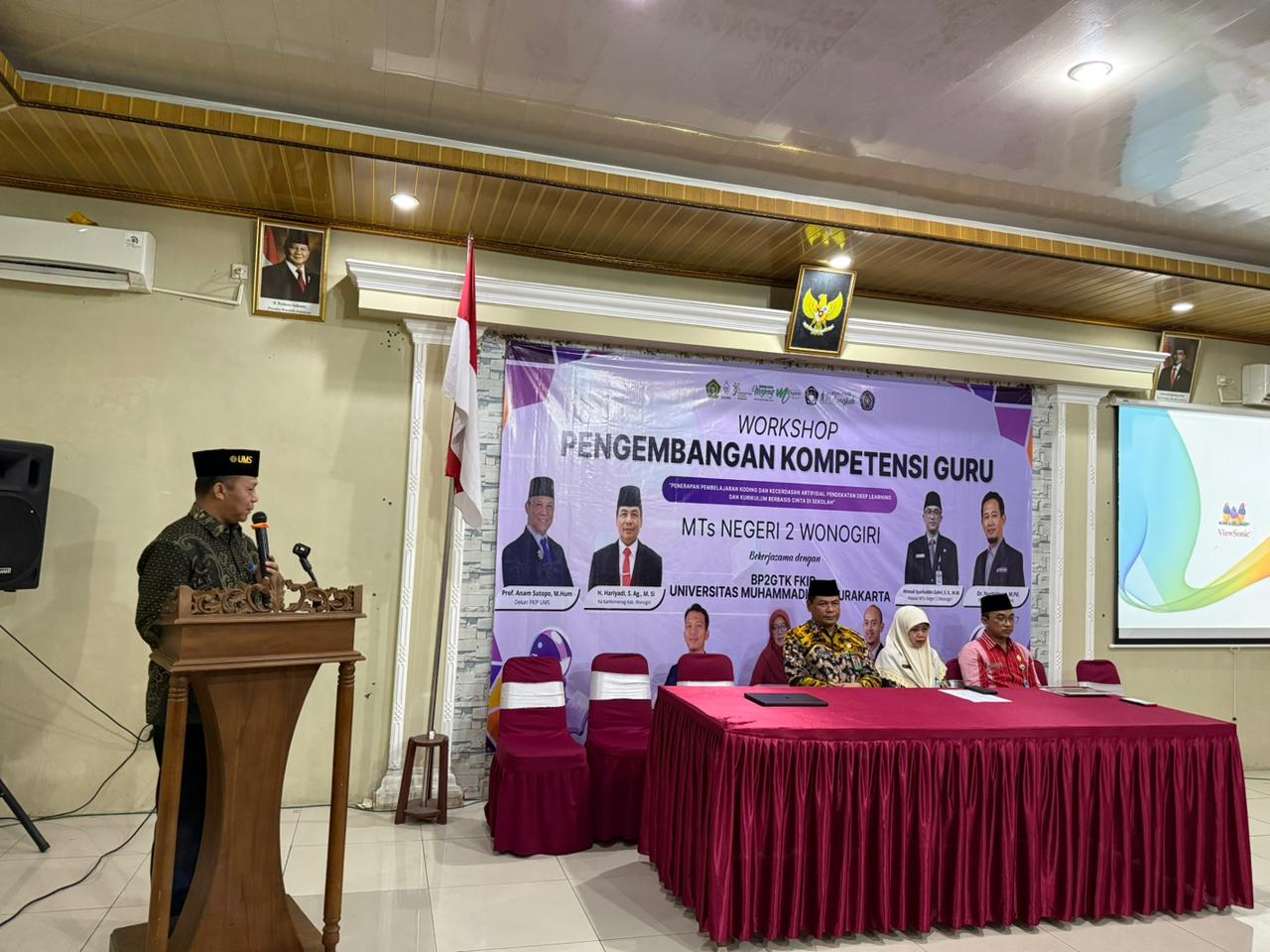
The event was officially opened by Dean of FKIP UMS, Prof. Dr. Anam Sutopo, M.Hum., and Head of the Wonogiri Ministry of Religious Affairs Office, H. Hariyadi, S.Ag., M.Si. In his remarks, Prof. Anam stated that teachers in the digital era must have strong technological literacy to be able to innovate in the learning process.
“Teachers are not only educators but also innovators who can integrate technologies such as coding and artificial intelligence into the teaching and learning process. Through a deep learning approach and a creation-based curriculum, we hope to foster a generation that is creative and adaptive to the times,” said Prof. Anam Sutopo.
Meanwhile, H. Hariyadi, S.Ag., M.Si., in his address, appreciated the strategic collaboration between the Wonogiri Ministry of Religious Affairs and FKIP UMS. He emphasized the importance of improving the competency of madrasah teachers so that learning becomes more contextual and relevant to students’ needs in the digital era.
This program was attended by dozens of MTs teachers from various districts in Wonogiri Regency. They received direct training on the implementation of coding learning, an introduction to artificial intelligence (AI), and the development of a creation-based curriculum that encourages creativity and innovation in schools.
Through this activity, it is expected that teachers will be able to apply the training results in their daily teaching, thereby producing students who are not only academically intelligent but also adaptive to technological advancements and creative in their work.